A stepper system can simplify a machine axis, deliver strong low-speed torque and reduce feedback wiring, but only when its usable torque, pulse rate, heat and load conditions are checked. By the end, you will be able to compare a Yako system with a servo, size the motor and drive from real motion data, and specify the checks a supplier must complete before commissioning.
Key takeaways
- Use open-loop steppers when missed-position detection is not critical.
- Size the drive from torque, speed, acceleration and load inertia.
- Choose servo feedback for high-speed, high-risk or disturbance-prone axes.
- Request wiring diagrams, safety data and commissioning support from suppliers.
Where Yako stepper drive benefits apply—and where they stop
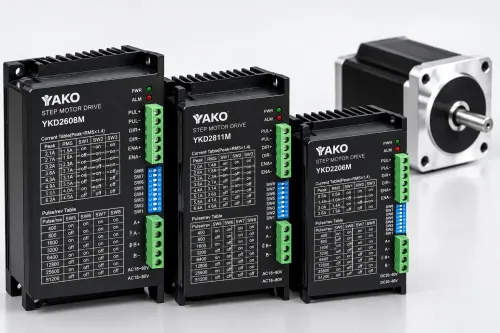
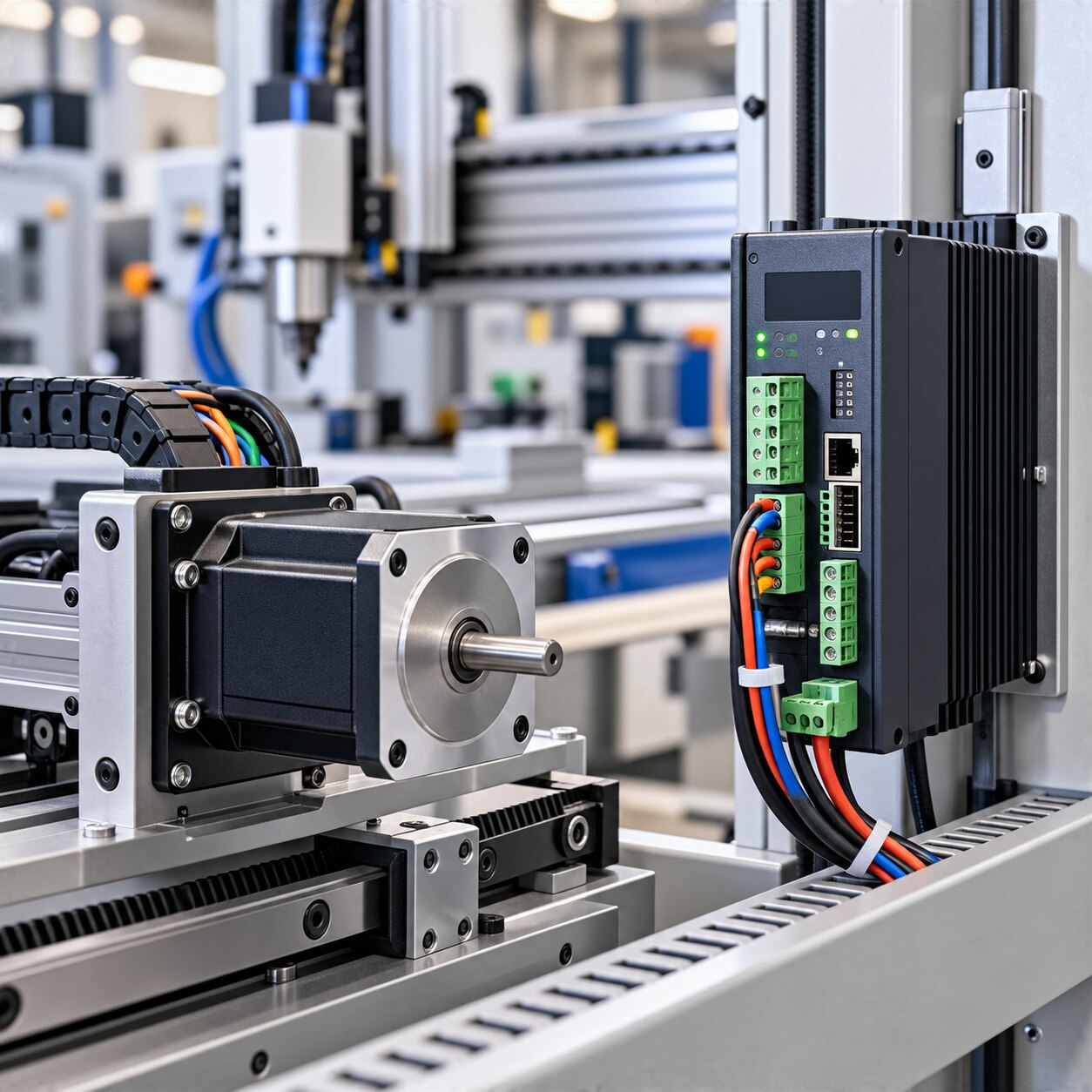
The main Yako stepper drive benefits are lower system complexity, fewer feedback cables and simpler commissioning. Without an encoder, the motor can deliver repeatable positioning, controlled acceleration and strong low-speed torque at lower installed cost. The trade-off is fundamental: an open-loop drive commands position but cannot confirm that the axis arrived there.
Design around these limits:
- Keep the motor below its pull-out torque and acceleration limits; excess load causes missed steps without an automatic position alarm.
- Check torque at the target speed, because available stepper torque falls as speed rises.
- Set current and decay mode correctly. Excess current creates heat, insufficient current loses torque, and poor decay settings cause rough motion.
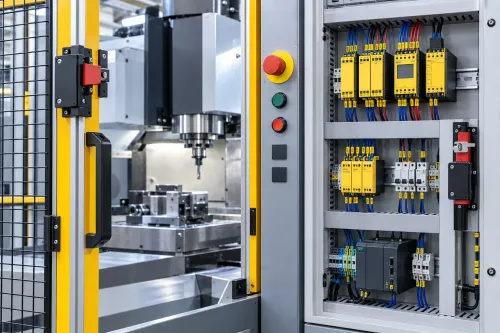
- Provide cabinet clearance and ventilation. Multiple drives in a sealed enclosure can require current derating.
- Check deceleration energy. An overrunning load can raise the DC bus and require a braking or dump resistor.
- Treat resonance, cable routing and earthing as design tasks. Acceleration shaping, microstepping, damping, shielded motor wiring and cable separation work better than simply increasing step resolution.
A Yako stepper is a practical choice for predictable, moderate-speed axes where occasional overload can stop the machine safely. Choose closed-loop servo control for high-speed motion, changing loads, vertical axes or any process where lost motion cannot be tolerated. A mixed machine can use steppers for simple indexing and servos for critical axes.
Size the motor and drive from the motion profile
Select the motor and drive from the axis motion profile, not the motor frame size or holding-torque number. Holding torque is measured at zero speed; available torque falls as speed rises because winding current cannot build instantly.
For a stepper drive for machine builders, calculate the required load torque and reflected inertia at the motor shaft, then check the motor’s torque–speed curve at the actual bus voltage, pulse rate and duty cycle. Include screw lead, pulley ratio, target speed, acceleration, vertical-load direction and the time spent moving, stopping and waiting.
- Convert the required linear force into motor torque using screw lead or pulley ratio.
- Add acceleration torque from the reflected inertia, including the load, screw, pulley and coupling.
- Compare peak and continuous demand with the curve, then retain a practical safety margin instead of using the zero-speed holding value.
- Confirm the drive’s adjustable current limit and current-decay setting; excess current creates heat, while insufficient current causes torque loss or missed steps.
- Check regenerative energy during deceleration or an overrunning load against the drive’s DC-bus limit and braking-resistor provision.
Thermal installation completes the calculation. Ambient temperature, mounting clearance, duty cycle and cabinet airflow can force current derating or forced ventilation when several drives share a sealed enclosure. Open-loop sizing removes encoder wiring and feedback-failure modes, but it cannot confirm that the axis reached position, so do not use it where lost motion is unacceptable.
Choose between a Yako stepper, servo, or combined axis strategy
A Yako stepper system is the better choice for intermittent, moderate-speed positioning with a predictable load, controlled acceleration and no requirement to report position error. It avoids encoder wiring and feedback commissioning, but it cannot confirm that the axis reached its commanded position after a stall or overload.
| Option | What it means | When it applies |
|---|---|---|
| Yako stepper | Open-loop positioning with strong low-speed torque and simpler wiring | Predictable loads, moderate speeds, repeatable indexing and cost-sensitive machines |
| Servo | Closed-loop position and speed control with following-error detection | High continuous speed, changing inertia, sustained peak torque, or motion where lost position cannot pass unnoticed |
| Combined axis strategy | Stepper and servo assigned to different motion demands | Use steppers for simple indexers and servos for critical, fast or variable-load axes |
Choose a servo for a vertical axis when a dropped load, following error or uncontrolled descent could damage the machine or product. A servo also suits frequent acceleration, high inertia changes and torque demand that approaches a stepper’s pull-out limit.
It costs more in feedback hardware and tuning, but the alarm and recovery data reduce commissioning and fault-finding risk.
Use both technologies when the machine has unequal axes: a servo for a high-speed gantry or synchronized feed, and a Yakotec stepper drive for a short-stroke clamp, feeder or indexing station. Confirm each axis independently from its torque–speed curve, duty cycle and failure consequence; one technology need not dictate the entire machine.
Verify feedback, safety, wiring and cabinet conditions
A yakotec stepper drive does not confirm that the axis reached its commanded position unless the selected system includes compatible feedback and error monitoring. Before installation, verify the motor current range, phase wiring, supply voltage, pulse-direction logic, input voltage, minimum pulse width, direction setup time and maximum pulse frequency against the controller output.
- Confirm the motor’s phase order, rated current, inductance and connector pinout; a wrong phase pair causes vibration or runaway motion.
- Check screw lead, pulley ratio, coupling alignment, shaft fit and reflected load inertia. A vertical axis also needs a brake or counterbalance that holds the load when power is removed.
- Check the drive’s allowable DC-bus voltage and braking-resistor provision. An overrunning load can raise bus voltage during deceleration and trip or damage the drive.
- Reserve cabinet space for clearance and airflow. Several drives in a sealed enclosure can require forced ventilation or current derating.
- Route twisted motor pairs away from pulse, encoder and analogue cables; bond protective earth and terminate shields exactly as the manual specifies.
- Confirm the emergency-stop category, drive fault response and whether the model provides a certified Safe Torque Off circuit. Do not treat a software alarm as a safety function.
Check these points before selecting the cabinet layout:
| Item | Confirm | Failure if missed |
|---|---|---|
| Feedback | Encoder type, voltage and interface | No reliable following-error detection |
| Control wiring | Logic level, timing and frequency | Missed pulses or erratic motion |
| Thermal design | Ambient, spacing and duty cycle | Overtemperature trips |
| Mechanical load | Torque, inertia and brake | Stall, drift or coupling damage |
What to request from a Yako drive supplier in Coimbatore
Do not approve a quoted drive from motor frame size or nominal current alone. Ask a Yako drive supplier to prove the exact motor-drive pairing at your bus voltage, pulse rate, acceleration and duty cycle, then document how the same axis will be supported after commissioning.
Request these documents and confirmations:
- Motor phase inductance, winding connection, rated current, torque–speed curves and recommended current limit and decay setting.
- Drive mains and control-voltage tolerances, allowable DC-bus voltage, input timing, alarm outputs and encoder requirements, if applicable.
- Braking or dump-resistor requirements for deceleration and overrunning loads; regeneration can trip or damage a drive.
- Cabinet ambient-temperature range, dust or ingress requirement, cooling clearance and EMC wiring guidance.
- Parameter-backup format, commissioning procedure, firmware or software needed, and named local service contact.
- Stock status, lead time, warranty process and a spare-drive policy with a confirmed replacement model.
Require the supplier to save the final parameters with the machine’s electrical drawings and backup file. A replacement that has the wrong motor current, decay mode or pulse settings can run hot, lose torque or move roughly even when its label appears compatible.
SSB INDUSTRIAL SOLUTIONS can make the procurement record useful by documenting the selected pairing, settings and replacement route rather than supplying a catalogue number alone. That preserves the Yako stepper drive benefits—simpler wiring and fewer feedback-failure modes—without pretending the open-loop axis confirms its actual position.
Related products
 | Yako stepper and drive Yakotec servo Stepper motor with drive stepper motor with brake servo motor and drive 2ph stepper motor yako drive View product → |
 | Stepper Drivers(DSP) Instar insists on providing better products and better service to promote our clients' competitiveness, actively explore customer's requirements,... View product → |
Frequently asked questions
Where do Yako stepper drive benefits apply, and where do they stop?
Yako stepper drives suit repeatable positioning, controlled acceleration and strong low-speed torque when the machine can tolerate open-loop operation. They do not confirm that the motor reached its commanded position, so use feedback when missed motion could damage the product, tooling or machine.
How should you size a Yako stepper motor and drive?
Start with the motion profile: required speed, acceleration, travel, load inertia, friction, duty cycle and available supply voltage. Check the motor-drive torque curve at the operating speed, then include an engineering margin instead of sizing from holding torque alone.
When should you choose a Yako stepper, servo, or combined axis strategy?
Choose a stepper for cost-sensitive, moderate-speed axes with predictable loads. Choose a servo when the axis needs feedback, high speed, rapid acceleration or recovery from disturbances. A combined strategy uses steppers for simple axes and servos for critical or dynamic axes.
What should you verify before installing a Yako drive?
Verify encoder requirements, emergency-stop behavior, limit switches, motor and control wiring, grounding, cabinet temperature, ventilation, supply protection and cable routing. Ask the supplier for the drive manual, wiring diagram, parameter list and commissioning procedure.
Keywords